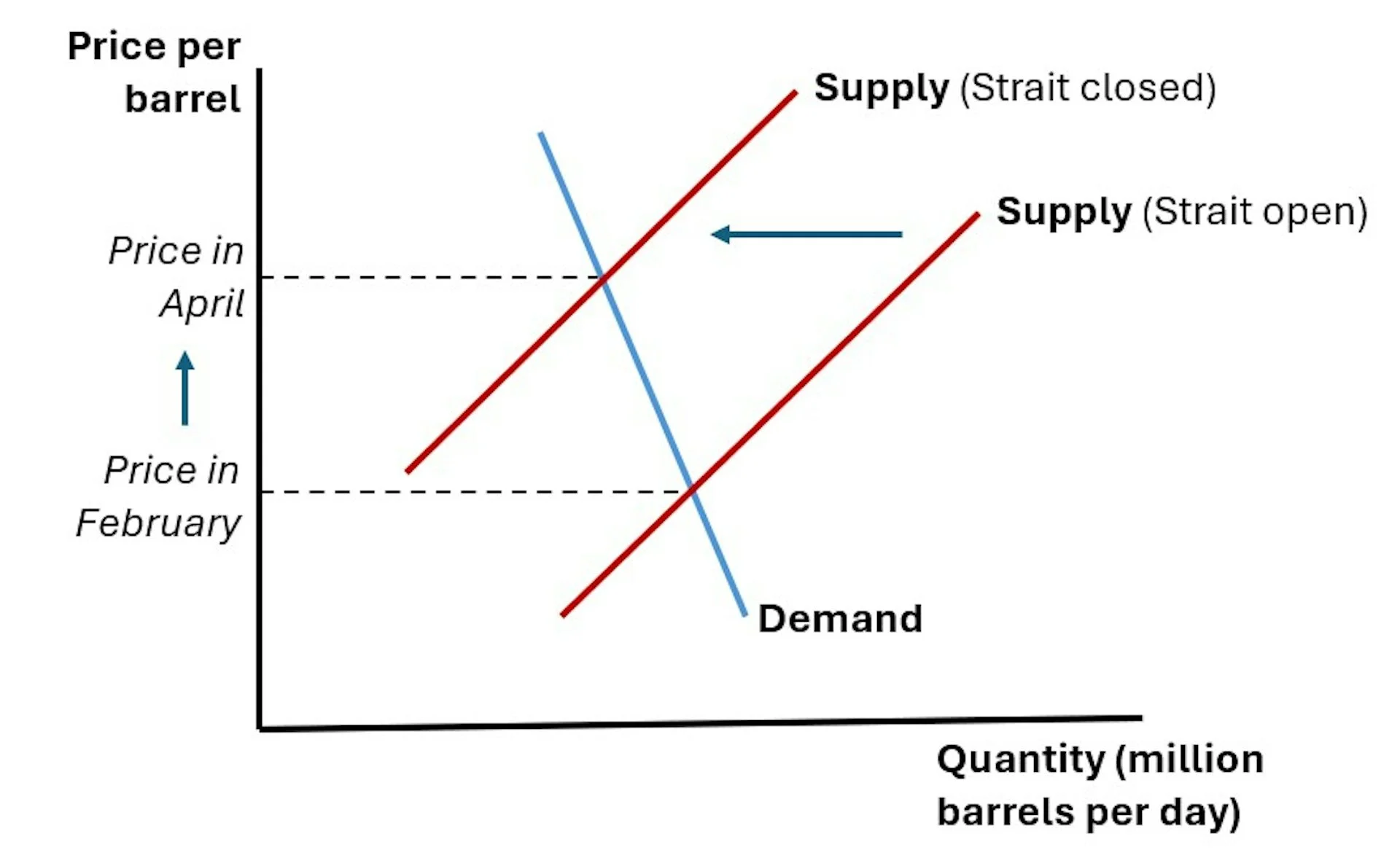
The recent escalation of geopolitical tensions, particularly the conflict in Iran, has unleashed a wave of volatility in global oil prices, resulting in profound ripples across the entire economy. The litmus test for this effect was evidenced by the price surge from approximately $66 a barrel in February 2026 to a staggering $101 by mid-April the same year, following the military actions involving the U.S. and Israel. This increase is not merely a statistic; it represents a fundamental shift in how fluctuations in oil prices can impact the dynamics of global trade, consumer behavior, and supply chain stability.
Understanding the Economics of Oil Price Fluctuations
Oil remains a cornerstone of the global economy, not simply as a primary energy source but as the backbone of numerous industries—from transportation to manufacturing. When the crude oil supply is disrupted, as it has been during recent conflicts, the economic ramifications extend far beyond elevated pump prices. The dynamics are rooted in basic economic principles, where supply constraints lead to heightened competition for dwindling resources, thereby driving up costs. However, this is often exacerbated by sudden geopolitical events that create panic and uncertainty in the market, leading to rapid price increases without adequate time for adjustment.
The Global Impacts of Oil Price Surges
The most immediate question that arises during these oil price spikes is: Who ultimately benefits from these heightened prices? While various narratives exist surrounding the flow of oil revenue, a significant portion typically filters back to the oil companies, particularly those at the source. Depending on their geographic and regulatory environments, these companies might allocate funds towards shareholder returns, investment in infrastructure, or, in some nations, bolster government reserves that can be utilized for social programs and public investment.
Regional Variations in Impact
In the Middle East, oil producers are grappling with mounting risks to production and infrastructure amidst ongoing conflict. These heightened risks translate into increased operational costs, including insurance and security. However, the relatively low cost of production often allows these nations—especially countries like Saudi Arabia—to benefit significantly from rising prices despite the geopolitical instability. The government’s control over oil production channels wealth that fuels public sector expenditure, thus quite literally purchasing stability through oil revenue.
The Permian Basin in the United States provides an interesting contrast. As oil prices escalate due to international conflicts, companies operating in this lucrative zone find themselves in a windfall scenario. Immediate revenue increases enable these firms to reward shareholders through dividends or to reinvest in future production capabilities. However, whether this translates into sustainable growth or speculative bubbles amidst geopolitical uncertainty remains to be seen.
Long-Term Economic Implications
Meanwhile, countries in the North Sea, such as the U.K. and Norway, adopt different approaches to leveraging oil profits. In the U.K., an additional tax on oil revenues ensures that a portion of profits contributes to public finances, thus tempering the impact of fluctuating market conditions on public services. Conversely, Norway’s model of channeling oil revenues into the Government Pension Fund Global represents a forward-thinking investment in the nation’s future, allowing for public spending and wealth preservation long after oil revenues might dwindle.
The Shadow of Russia's Oil Revenue
In stark contrast, Russia's oil revenue landscape operates under a cloud of sanctions stemming from geopolitical issues, notably its actions in Ukraine. While Western countries have limited Russia's ability to sell oil above a specified price, the opacity surrounding revenue streams often means that actual benefits of high prices may disproportionately favor oligarchs closely aligned with the regime. The average citizen, meanwhile, finds little solace amid rising global prices.
Consumer Response and the Future of Energy
For the average consumer, soaring oil prices trigger a cycle of frustration, as cash flows into the coffers of the oil industry. However, there appears to be a gradual shift in sentiment—conversations around alternative energy sources have gained traction as individuals and governments recalibrate their approaches to energy reliance. The demand for renewable sources is surging as a response to both price volatility and climate concerns, suggesting that a proactive pivot away from fossil fuels may play a crucial role in recalibrating the energy landscape over the next decade.
The complexity of the global oil market reveals stark inequalities in who benefits from price changes. Observing who capitalizes on these surges provides critical insights for industry professionals navigating this tangled web of geopolitics and economics. At the same time, the pressures on consumers and the environment may forge a pathway toward lasting change in energy consumption paradigms that could ultimately reshape the future of energy.